

Many buyers receive incorrect material because key parameters are missing from their inquiry.
When purchasing silicone coated fiberglass fabric for a production project, standard specifications are not always enough. Different applications may require specific thickness, GSM, coating side, width, roll length, color, or surface performance.
For bulk orders, clearly defining these requirements before quotation can help avoid specification mismatches, unnecessary production changes, and delays.
This guide explains the key specifications to confirm when ordering custom silicone coated fiberglass fabric from a manufacturer.
1. Start With the Final Application
Before specifying the fabric, tell your supplier how the material will be used.
Common applications include:
- Removable insulation covers
- Welding blankets and curtains
- Heat shields and protective covers
- Expansion joints
- Flexible connectors
- Industrial thermal protection
- Electrical insulation
- Other high-temperature protection applications
The application affects the required base fabric, silicone coating, thickness, coating side, flexibility, and surface requirements.
For example, a fabric used for a flexible connector may require different handling characteristics from one used for a heavy-duty welding protection application.
2. Confirm the Fiberglass Base Fabric
Silicone coated fiberglass fabric consists of a fiberglass fabric base with silicone coating applied to one or both sides.
When requesting a customized product, confirm the base fabric specification with the supplier.
Important factors can include:
- Fiberglass fabric construction
- Yarn type
- Fabric weight
- Weave
- Thickness
- Required mechanical strength
The base fabric influences the finished material’s flexibility, strength, dimensional stability, and temperature performance.
If you already have a material specification from your existing supplier, providing it during the RFQ process can make comparison easier.
3. Specify the Silicone Coating Side
One of the most important customization options is the coating configuration.
You may require:
- Single-side silicone coated fiberglass fabric
- Double-side silicone coated fiberglass fabric
Single-side coating can be suitable when protection is mainly required on one surface or when flexibility and cost need to be considered.
Double-side coating provides silicone-coated surfaces on both sides and may be preferable when the fabric needs surface protection from both directions.
However, double-side coating does not automatically mean higher temperature resistance. Temperature performance depends on the complete material construction and actual working conditions.
4. Define Thickness and GSM
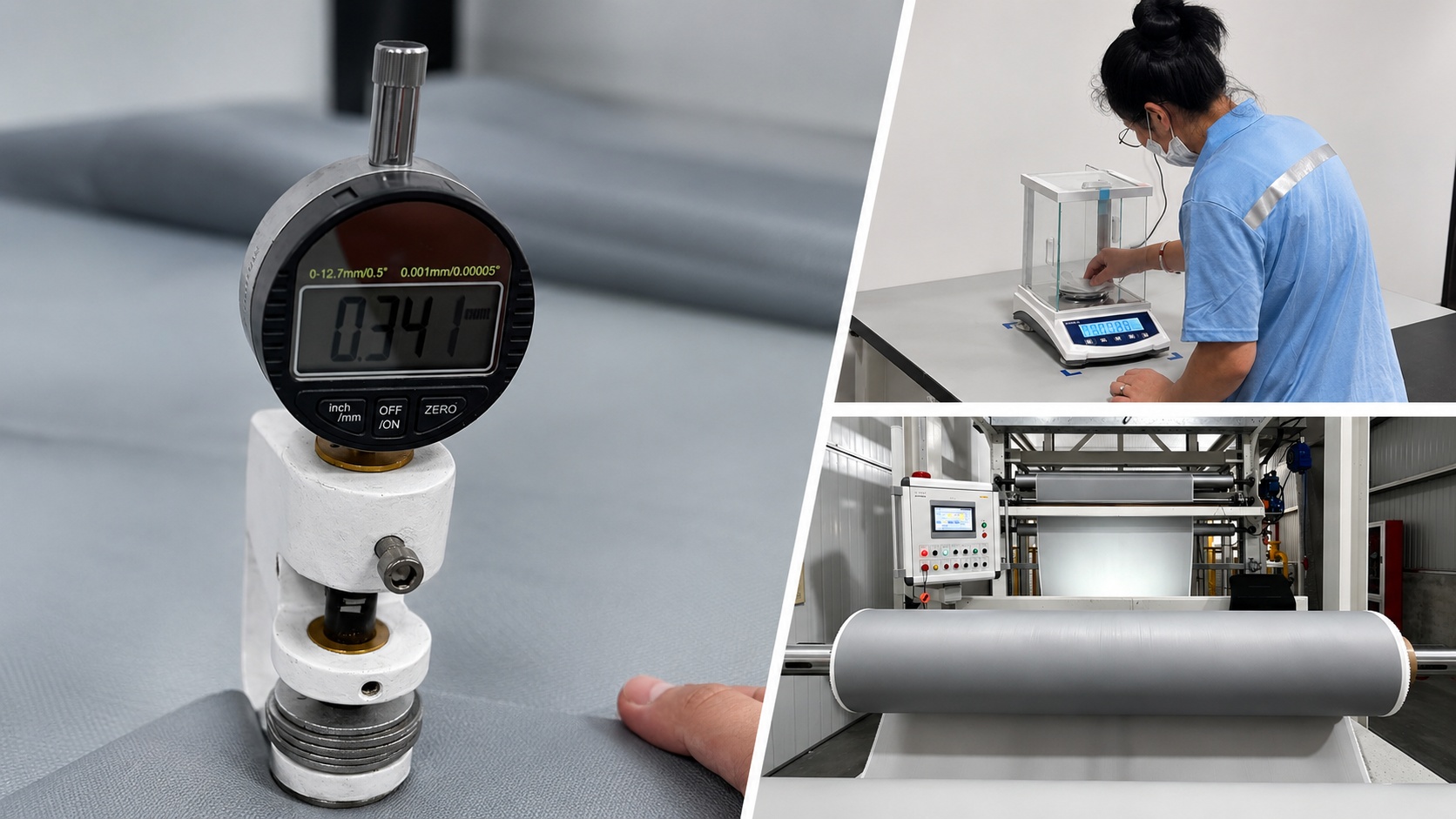
Thickness and GSM are two specifications that should be clearly confirmed before bulk production.
Thickness affects:
- Material handling
- Flexibility
- Fabrication
- Overall construction
GSM (grams per square meter) indicates the fabric’s weight per unit area and is useful when comparing material constructions.
For example, two silicone coated fiberglass fabrics may have similar appearances but significantly different weights and thicknesses.
When requesting a quotation, specify the required thickness and GSM rather than relying only on descriptions such as “heavy duty” or “high temperature.”
If a tolerance is important for your application, include the acceptable tolerance in the RFQ.
5. Specify Fabric Width and Roll Length
For production users, fabric dimensions can be just as important as the material itself.
Typical specifications to confirm include:
- Fabric width
- Roll length
- Roll quantity
- Core size, if required
- Packaging requirements
The correct width can reduce material waste during cutting and fabrication.
If your downstream process uses a fixed cutting width, provide that information to the supplier. It can help the manufacturer determine whether a standard width or customized width is more appropriate.
6. Confirm Color and Surface Requirements
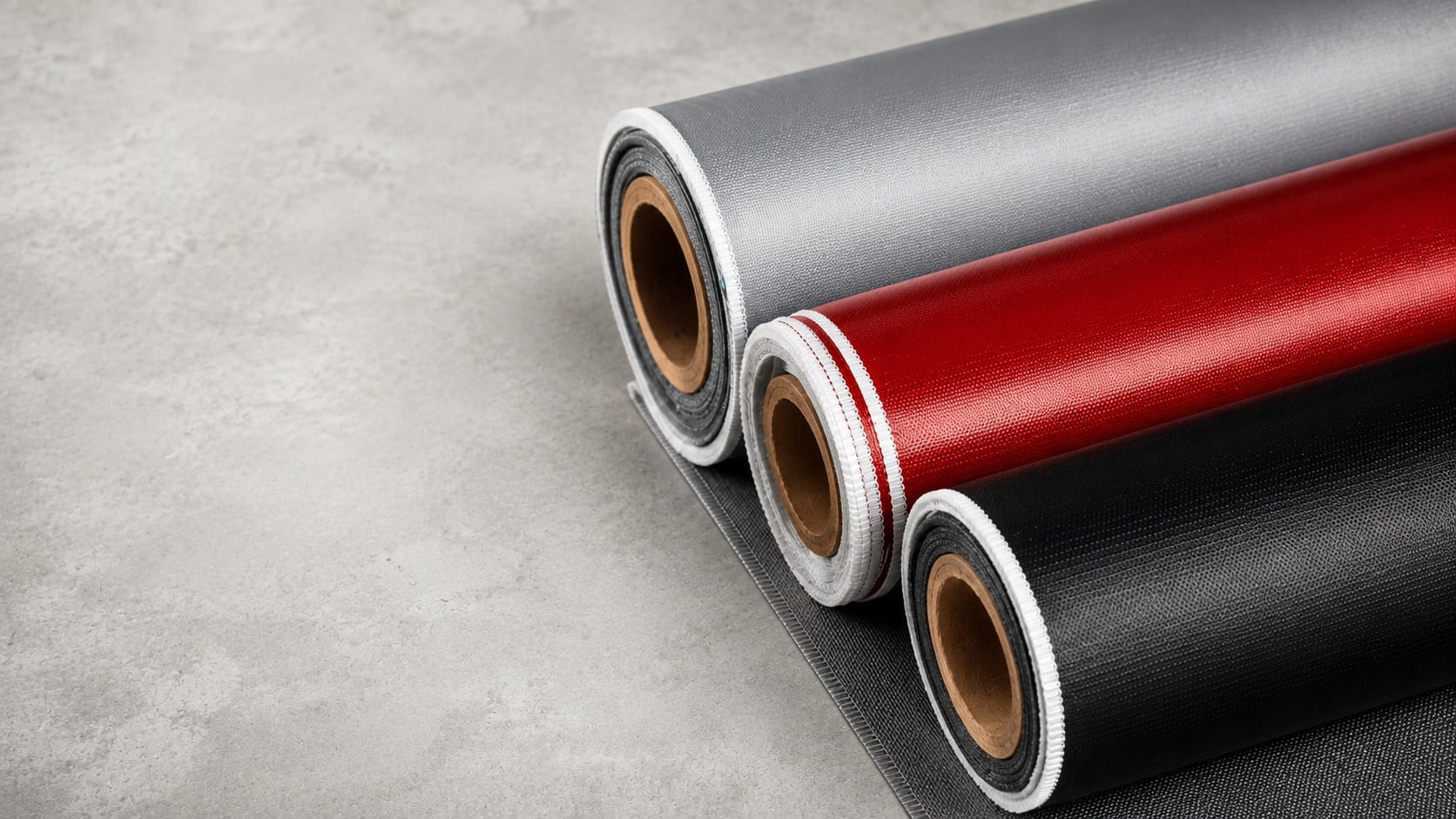
Silicone coated fiberglass fabric can be produced in different colors depending on the material construction and application requirements.
Common considerations include:
- Color
- Surface appearance
- Smoothness
- Coating uniformity
- Surface defects
- Special identification requirements
For industrial orders, color may also be used to distinguish different material grades or production applications.
If the color needs to match an existing product, provide a reference sample or an accepted color standard whenever possible.
7. Define Temperature and Working Conditions
Do not specify a fabric only by saying “high temperature.”
The supplier should understand the actual working environment.
Provide information such as:
- Continuous operating temperature
- Short-term peak temperature
- Direct or indirect heat exposure
- Contact with hot surfaces
- Exposure to sparks or molten metal
- Outdoor or indoor use
- Exposure to oil, water, chemicals, or other substances
The temperature resistance of silicone coated fiberglass fabric depends on the fiberglass substrate, silicone coating, construction, exposure conditions, and duration.
Therefore, the actual application conditions should be considered when selecting the material.
8. Tell the Supplier What Happens After Delivery
Custom fabric selection should also consider what your company will do with the material after receiving it.
For example, the fabric may be:
- Cut into panels
- Sewn into removable covers
- Fabricated into welding protection products
- Used as an outer layer
- Laminated with another material
- Processed into flexible industrial components
This information can affect the recommended thickness, coating side, flexibility, width, and surface characteristics.
For example, if the material will be cut and sewn, excessive thickness or an unsuitable coating construction may affect fabrication efficiency.
9. What to Include in a Custom Fabric RFQ
A clear RFQ helps the supplier understand your requirements before preparing a quotation.
For custom silicone coated fiberglass fabric, your RFQ can include:
| Specification | Example requirement |
|---|---|
| Base fabric | Fiberglass fabric |
| Coating | Silicone |
| Coating side | Single-side / Double-side |
| Thickness | Required thickness |
| GSM | Required weight |
| Width | Required width |
| Roll length | Required length per roll |
| Color | Required color |
| Application | Welding / insulation / flexible connector / etc. |
| Temperature | Continuous and peak temperature |
| Quantity | Required bulk quantity |
| Packaging | Roll packaging or other requirements |
If you already use an existing material, sending a technical datasheet, drawing, sample, or previous supplier specification can make the quotation process more accurate.
10. Customization Is More Than Changing the Color
When buyers search for custom silicone coated fiberglass fabric, customization should not be understood simply as choosing a different color.
A manufacturer may need to adjust or confirm several material parameters, including:
- Fiberglass fabric construction
- Thickness
- GSM
- Silicone coating side
- Coating weight
- Width
- Roll length
- Color
- Surface requirements
- Packaging
- Production quantity
The more clearly these specifications are defined, the easier it is to determine whether a standard product can meet the requirement or whether a customized construction is necessary.
11. Final Checklist Before Ordering
Before placing a bulk order, confirm the following:
- Application is clearly defined
- Fiberglass base fabric is confirmed
- Single-side or double-side coating is specified
- Thickness is confirmed
- GSM is confirmed
- Fabric width is confirmed
- Roll length is confirmed
- Color is confirmed
- Temperature conditions are provided
- Required quantity is confirmed
- Fabrication requirements are communicated
- Packaging requirements are confirmed
- Sample or technical specifications have been reviewed if necessary
A complete specification reduces the risk of receiving a material that looks similar but does not perform as required in the final application.
Conclusion
Choosing custom silicone coated fiberglass fabric for a bulk order requires more than selecting a product name.
The key is to define the complete material specification according to the application, including the fiberglass base fabric, coating side, thickness, GSM, width, roll length, color, temperature conditions, and downstream fabrication requirements.
For buyers who already have a target specification, drawing, sample, or application requirement, providing these details to the manufacturer at the quotation stage can make the sourcing process more efficient.
If you are looking for a supplier of silicone coated fiberglass fabric with customized specifications, you can contact Jiangxi Suihua Fiberglass to discuss your application and bulk-order requirements.

 English
 Russian
 Spanish
 Italian
 Arabic
 Portuguese
 German