

Fabric expansion joints are used in industrial ducting and equipment systems to absorb thermal movement, vibration and misalignment while reducing stress on connected components.
Their performance depends heavily on the fabric expansion joint material used in the flexible section.
A material that works well in one system may not be suitable for another because operating temperature, movement, moisture, chemicals and fabrication requirements can vary significantly.
For industrial buyers and fabricators, selecting the right material therefore requires more than choosing a fabric described as “high temperature.”
This guide explains the main factors to consider before specifying coated fiberglass fabric for a fabric expansion joint.
1. Start With the Operating Temperature
Temperature is usually the first factor to confirm.
Before selecting a material, buyers should identify:
- Normal continuous operating temperature
- Maximum short-term temperature
- Frequency of heating and cooling
- Whether the fabric directly contacts hot gases
- Whether additional insulation is used
A fabric continuously exposed to elevated temperatures may require a different construction from one exposed only to occasional temperature peaks.
Temperature cycling is also important because repeated heating and cooling causes movement throughout ducting and equipment systems.
The selected material should therefore maintain sufficient flexibility and structural stability under the actual operating conditions.
Buyers should avoid selecting fabric based only on a single maximum temperature value shown on a product specification.
2. Consider Movement and Flexibility
Fabric expansion joints may need to accommodate:
- Axial movement
- Lateral movement
- Angular movement
- Vibration
- Equipment misalignment
For applications involving repeated movement, flexibility is especially important.
A very heavy coated fabric may provide good mechanical strength but may also become too stiff for some joint designs. A lighter material may provide greater flexibility but may not offer enough strength for demanding service conditions.
This means fiberglass construction, finished thickness and coating weight should be considered together.
For applications involving frequent flexing, buyers should also evaluate whether the coating remains properly bonded to the fiberglass substrate after repeated bending.
The objective is not simply to select the thickest fabric, but to achieve the correct balance between flexibility and mechanical performance.
3. Evaluate Chemical, Moisture and Outdoor Exposure
High temperature is not the only challenge in many industrial environments.
Fabric expansion joints may also be exposed to:
- Moisture
- Steam
- Oil
- Dust
- Exhaust gases
- Process chemicals
- Outdoor weather
- Condensation
These conditions can affect both the coating and the underlying fiberglass fabric.
For example, outdoor ducting may require greater resistance to moisture and weather exposure, while a chemical-processing application may require additional consideration of the gases or chemicals in contact with the material.
When requesting a quotation, buyers should provide information about the actual service environment instead of simply asking for a “chemical-resistant” or “weather-resistant” fabric.
Chemical compatibility depends on the substance, concentration, temperature and duration of exposure.
4. Choose the Appropriate Coating System
Different coated fiberglass fabrics provide different combinations of flexibility, surface protection and temperature performance.
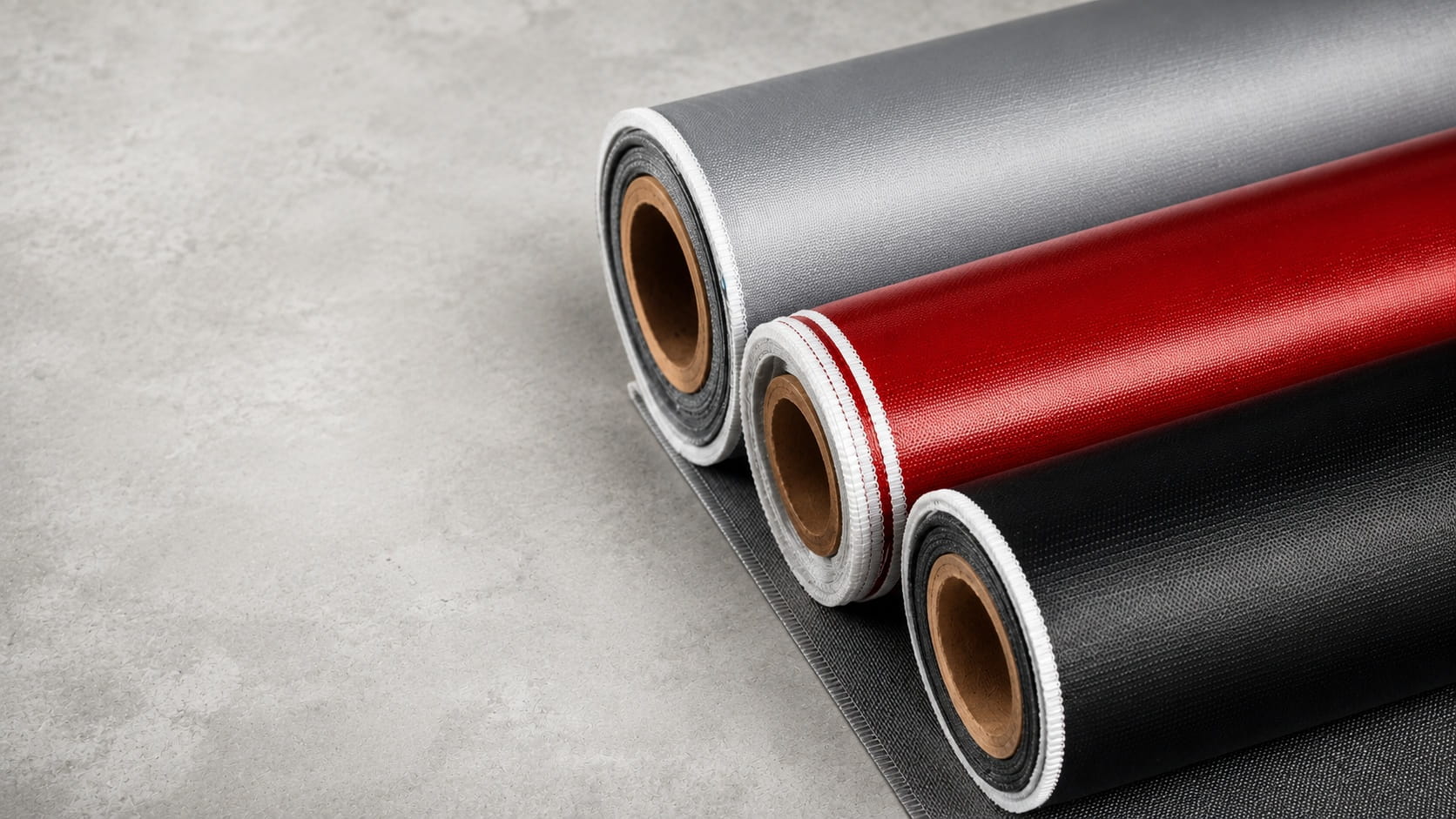
Silicone Coated Fiberglass Fabric
Silicone coated fiberglass fabric is commonly considered for industrial applications requiring a combination of:
- Heat resistance
- Flexibility
- Moisture resistance
- Durable coated surfaces
- Ease of fabrication
These characteristics make it suitable for many flexible ducting and expansion joint applications.
Buyers evaluating a silicone coated fiberglass expansion joint should still select the fabric thickness, coating weight and coating configuration according to the actual operating environment.
PU and Other Coated Fiberglass Fabrics
PU coated fiberglass and other treated fiberglass fabrics may also be used where specific flexibility, abrasion, flame or processing characteristics are required.
However, one coating system should not automatically be treated as a direct replacement for another.
The correct choice should be based on the complete technical specification and end-use conditions.
5. Match Fabric Weight, Thickness and Coating Sides
The fiberglass substrate provides much of the strength and structure of the finished material.
Important factors include:
- Base fabric weight
- Weave construction
- Finished thickness
- Tensile strength
- Coating weight
- Single- or double-sided coating
Heavier fabric is not automatically better.
Increasing the fiberglass weight or coating quantity can increase strength and surface protection, but it can also increase stiffness and finished weight.
The same principle applies to coating sides.
Single-sided coating may be suitable when one surface requires protection and greater flexibility is preferred. Double-sided coating may be selected when both surfaces require additional protection.
The coating configuration should match the expansion joint design rather than being selected simply because one option appears more substantial.
Buyers can review available silicone coated fiberglass fabric products when comparing thicknesses and coating constructions.
6. Consider Fabrication and Roll Dimensions
The material must perform during fabrication as well as during industrial service.
Expansion joint fabric may need to be:
- Cut
- Folded
- Sewn
- Clamped
- Reinforced
- Combined with insulation layers
Buyers should consider whether the fabric can be processed efficiently without excessive cracking, fraying or coating separation.
Roll dimensions are also important.
Before ordering, confirm:
- Roll width
- Usable width
- Roll length
- Dimensional tolerance
- Required finished panel dimensions
If the material is too narrow, additional seams may be required, increasing labor and complicating fabrication.
For OEM or repeat production, selecting an appropriate roll width can reduce waste and improve cutting efficiency.
7. Review Documentation and Production Consistency
Industrial buyers should review technical documents relevant to the project before approving bulk production.
These may include:
- Material specifications
- Thickness and weight data
- Flame-related test reports
- Third-party testing
- Quality inspection records
- Management system certificates
It is important to distinguish between company certification and product-specific testing.
A management system certificate, for example, does not automatically prove the performance of a particular coated fabric.
Buyers can review available certificates and test reports and confirm whether the tested construction matches the material being ordered.
For repeat orders, production consistency is equally important.
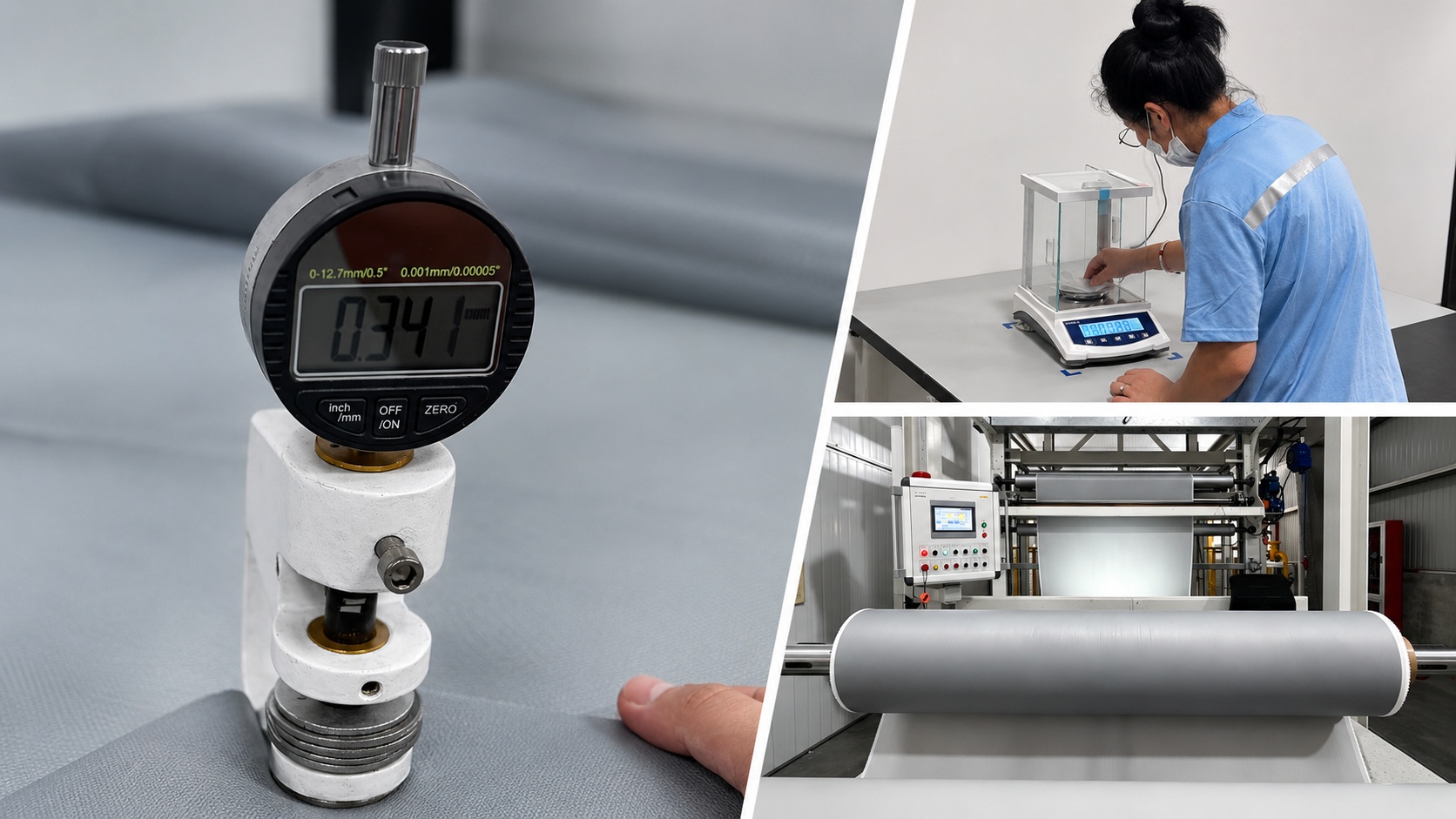
Thickness, coating appearance, width, flexibility and base fabric construction should remain within the agreed specification from batch to batch.
Reviewing the supplier’s quality control process can help buyers understand how materials and finished rolls are inspected before shipment.
Fabric Expansion Joint Material Specification Checklist
Before requesting a quotation, provide the supplier with the following information whenever possible:
- Normal operating temperature
- Maximum short-term temperature
- Type of duct or equipment
- Required movement
- Chemical or gas exposure
- Indoor or outdoor installation
- Required fabric thickness
- Coating type and coating side
- Required roll width
- Required test documents
- Approximate order quantity
- Approved sample requirements
Providing clear application information makes it easier to select a suitable material and reduces misunderstandings during bulk production.
FAQ
What is the best fabric expansion joint material for high-temperature applications?
There is no single material suitable for every application.
The correct choice depends on temperature, movement, chemical exposure, flexibility, fabrication requirements and the overall expansion joint design.
Silicone coated fiberglass fabric is commonly considered when heat resistance, flexibility and coated surface protection are required.
Is thicker fabric always better?
No.
A thicker or heavier material may provide greater mechanical strength, but it may also reduce flexibility.
The selected construction should balance strength with the movement requirements of the expansion joint.
Should buyers approve a sample before bulk production?
Yes, especially for customized specifications.
An approved sample provides a reference for thickness, coating appearance, flexibility and overall construction before mass production.
Conclusion
Choosing the correct fabric expansion joint material requires more than comparing temperature ratings.
Industrial buyers should consider operating temperature, movement, chemical exposure, coating type, fiberglass construction, thickness, fabrication requirements and technical documentation together.
For high-temperature ducting and flexible connections, silicone coated fiberglass fabric can provide a practical combination of flexibility and heat-resistant performance when the material construction is properly matched to the application.
Clear technical specifications and approved samples help improve consistency and reduce purchasing risks in repeat orders.

 German
  English
  Russian
  Spanish
  Italian
  Arabic
  Portuguese