

HVAC systems often connect fans, air handling units, blowers, ductwork and other mechanical equipment that generate vibration, movement and temperature changes during operation.
If these components are connected only by rigid ductwork, vibration can be transferred through the system and increase mechanical stress. Flexible connectors are therefore commonly installed between equipment and ducts to absorb limited movement and help isolate vibration.
The performance of an HVAC flexible connector depends heavily on the fabric used in the flexible section.
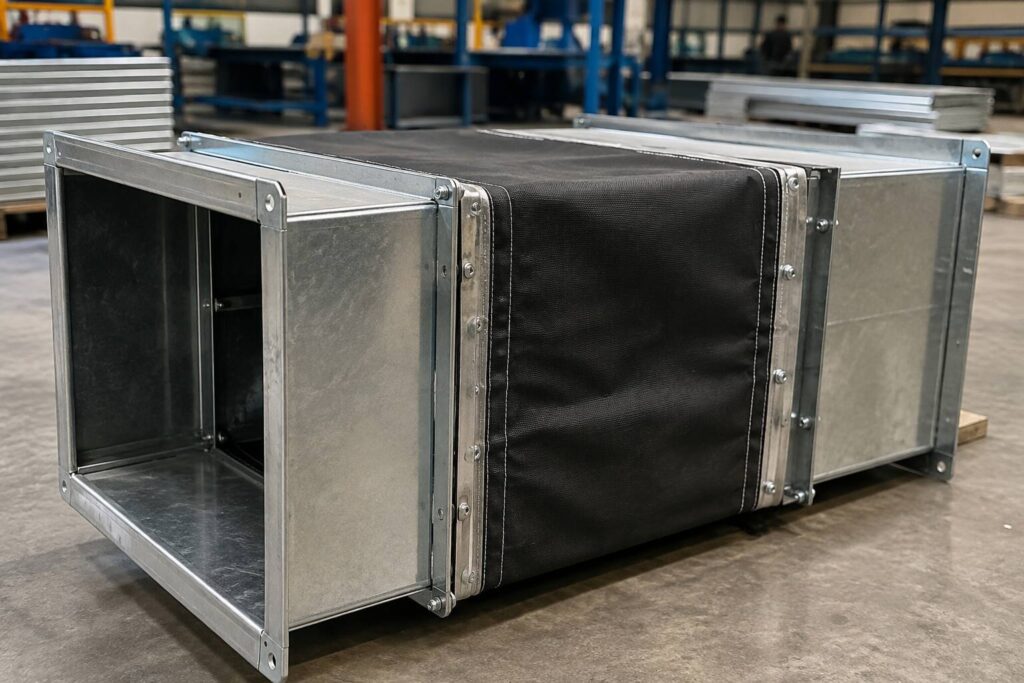
Silicone coated fiberglass fabric for HVAC applications is a practical option for industrial systems that require a combination of heat resistance, flexibility, mechanical reinforcement and environmental durability.
However, not every coated fiberglass fabric is suitable for every connector.
Industrial buyers should evaluate operating temperature, fabric construction, coating type, thickness, flexibility, airflow conditions and service environment before selecting a material.
This guide explains the main factors to consider.
What Is an HVAC Flexible Connector?
An HVAC flexible connector is a flexible section installed between ductwork and mechanical equipment.
Typical applications include:
- Air handling units
- Exhaust fans
- Industrial blowers
- Ventilation systems
- Heating equipment
- Process air systems
- Dust collection systems
- Industrial exhaust ducts
Its primary purpose is to accommodate limited movement and reduce the transmission of vibration between equipment and connected ductwork.
Depending on the installation, the connector fabric may also be exposed to:
- Positive or negative air pressure
- Continuous vibration
- Temperature fluctuations
- Moisture and condensation
- Dust
- Outdoor conditions
- Repeated flexing
- Industrial contaminants
For this reason, the fabric should be treated as an engineering component rather than simply a flexible cover.
Why Use Silicone Coated Fiberglass Fabric for HVAC Systems?
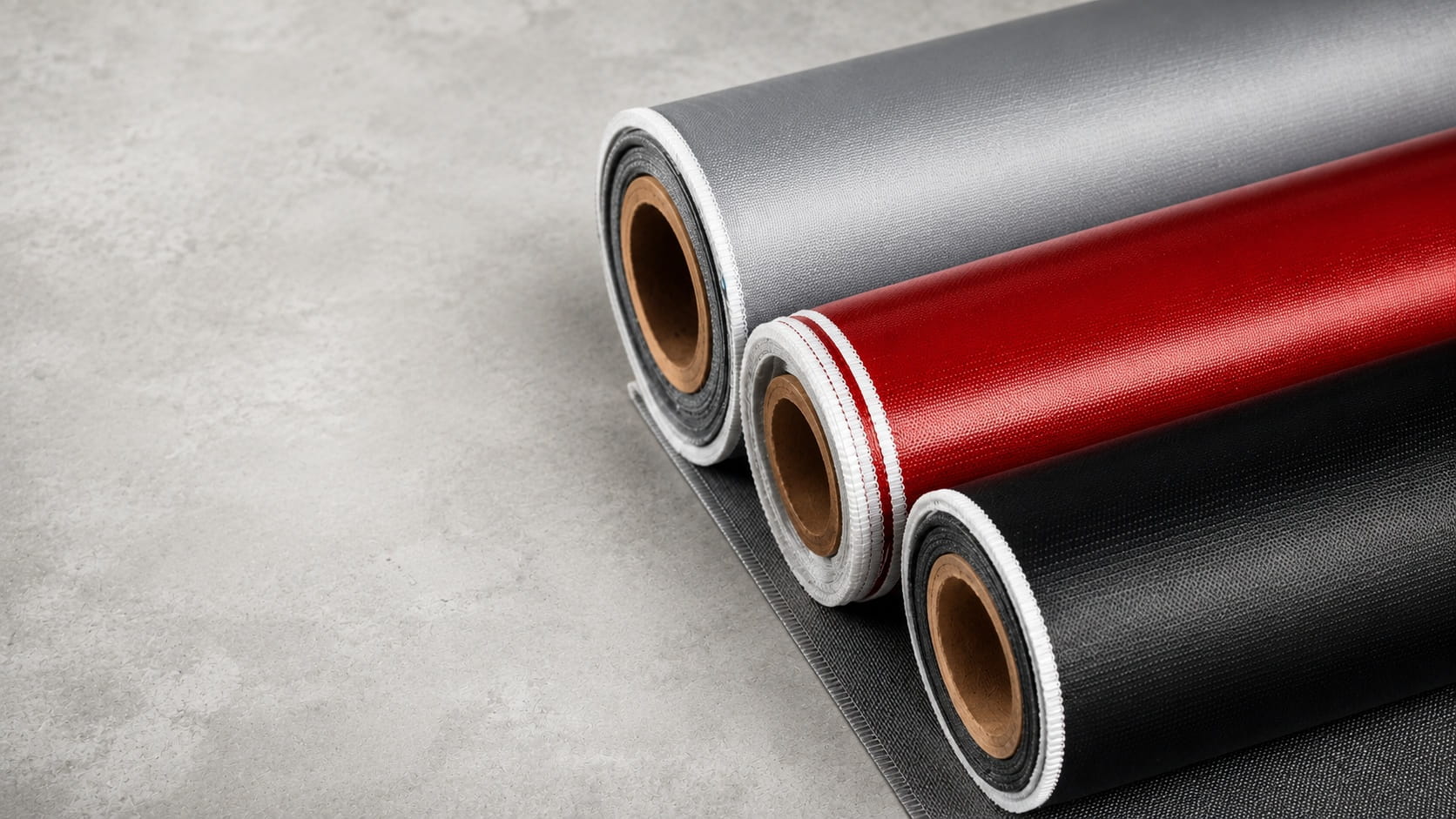
Silicone coated fiberglass fabric combines a woven fiberglass base fabric with a silicone elastomer coating.
The fiberglass reinforcement provides dimensional stability and mechanical strength, while the silicone coating improves surface protection, flexibility and resistance to environmental exposure.
This combination can be useful for industrial HVAC flexible connectors that operate under more demanding conditions than standard commercial ventilation systems.
Heat Resistance
Industrial HVAC systems may be installed near boilers, furnaces, process equipment or heated exhaust lines.
In these environments, ordinary flexible materials may not provide sufficient temperature resistance.
Fiberglass offers a thermally stable reinforcement structure, while the silicone coating allows the finished fabric to remain flexible and easier to process.
The allowable service temperature should always be confirmed according to the specific coated fabric construction rather than relying only on the temperature resistance of the fiberglass base.
Flexibility
A flexible connector must move repeatedly during operation.
The fabric therefore needs enough flexibility to absorb vibration without becoming excessively stiff.
Silicone coated fiberglass fabric can provide a useful balance between reinforcement and flexibility when properly matched to the connector design.
Moisture and Environmental Resistance
HVAC installations may also experience:
- Condensation
- Humidity
- Water splash
- Outdoor weather
- Ozone
- Temperature cycling
The silicone coating helps protect the fiberglass surface and can improve durability in these environments.
1. Start With the Operating Temperature
Temperature should be one of the first specifications confirmed.
Instead of asking only:
“Is this material heat resistant?”
buyers should provide the supplier with more specific information.
Important data includes:
- Normal continuous operating temperature
- Maximum short-term temperature
- Whether hot air directly contacts the fabric
- Radiant heat exposure
- Temperature cycling frequency
A flexible connector used in a standard ventilation system has very different requirements from one installed near a high-temperature industrial exhaust line.
Buyer Tip
Always ask for the recommended service temperature of the finished silicone coated fiberglass fabric, not only the fiberglass yarn or untreated base cloth.
2. Evaluate the Fiberglass Base Fabric
The silicone coating is important, but the fiberglass substrate provides much of the mechanical reinforcement.
Important characteristics include:
- Fabric weight
- Thickness
- Weave structure
- Tensile strength
- Tear resistance
- Dimensional stability
A heavier fabric is not automatically better.
For connectors that experience frequent movement, an excessively heavy construction can reduce flexibility.
On the other hand, a very lightweight fabric may not provide enough strength for large ducts or demanding mechanical conditions.
The correct material should balance:
strength + flexibility + service life
rather than simply maximizing GSM or thickness.
3. Check the Silicone Coating
Two coated fabrics with similar fiberglass substrates can perform differently if the coating quality is inconsistent.
Industrial buyers should pay attention to:
- Coating weight
- Surface uniformity
- Coating adhesion
- Bare fiberglass areas
- Pinholes
- Cracking
- Uneven curing
Coating consistency is particularly important for flexible connectors because the material may experience repeated vibration and folding.
More silicone is not always better.
A very heavy coating can increase stiffness, material weight and cost. The coating level should match the actual service requirements.
4. Single-Sided vs Double-Sided Silicone Coating
Both constructions can be suitable depending on the connector design.
Single-Sided Coating
Single-sided silicone coated fiberglass fabric may be suitable when:
- Only one surface requires additional protection
- Lower material weight is preferred
- The opposite side remains enclosed
- Cost control is important
- Both surfaces are not equally exposed
Double-Sided Coating
Double-sided coating may be preferred when:
- Both surfaces are exposed
- Moisture or contamination may reach either side
- Repeated handling is expected
- Improved surface protection is required
- The fabrication process benefits from two coated surfaces
Double-sided coating should not automatically be considered better in every application.
The correct choice depends on the connector structure and operating environment.
5. Consider Vibration and Repeated Flexing
HVAC connector fabric is different from many static thermal protection materials because it operates under movement.
Repeated vibration can eventually cause:
- Surface cracking
- Coating separation
- Edge damage
- Loss of flexibility
- Fatigue around attachment points
For highly vibrating equipment, coating adhesion and fabric flexibility can be just as important as maximum temperature resistance.
When discussing a new project with a supplier, buyers should explain:
- Equipment type
- Expected vibration
- Connector dimensions
- Installation method
- Frequency of movement
This information helps determine whether the proposed fabric construction is suitable.
6. Match Thickness to the Connector Design
Thickness influences several practical characteristics:
- Flexibility
- Mechanical strength
- Folding
- Sewing
- Clamping
- Connector weight
A thicker fabric may offer greater mechanical reinforcement, but it may also be harder to fold or fabricate into compact connector designs.
A thinner fabric may offer greater flexibility but may not be suitable for large or heavily loaded systems.
A useful selection approach is:
| Operating condition | Main priority |
|---|---|
| Frequent movement | Flexibility and fatigue resistance |
| High mechanical load | Stronger fiberglass substrate |
| Higher temperature | Thermal stability |
| Outdoor installation | Weather and moisture resistance |
| Compact connector | Lower thickness and flexibility |
| Large industrial duct | Strength and dimensional stability |
The correct thickness depends on the complete connector design rather than one specification alone.
7. Consider Airflow and Pressure
Flexible connectors may operate under positive or negative pressure.
Large ducts and industrial ventilation systems can also create continuous airflow-induced vibration.
Buyers should provide information such as:
- Duct dimensions
- Operating pressure
- Air velocity
- Connector width
- Unsupported fabric area
Larger connectors may require stronger fabric constructions or additional reinforcement.
For this reason, material selection should be coordinated with the connector design rather than based only on a standard roll specification.
8. Check the Service Environment
Temperature is not the only condition that affects material performance.
HVAC flexible connector fabrics may also encounter:
- Condensation
- Water
- Dust
- Oil
- Outdoor weather
- Ozone
- Industrial fumes
- Cleaning agents
If chemical exposure is expected, the buyer should provide specific information to the supplier.
Silicone coating offers useful environmental resistance, but it should not be assumed to resist every chemical or operating condition.
9. Confirm Flame and Safety Requirements
Terms such as:
- Heat resistant
- Flame resistant
- Flame retardant
- Fireproof
should not automatically be treated as equivalent.
Industrial projects may require specific test methods, certificates or customer standards.
Before ordering, buyers should confirm:
- Required flame performance
- Applicable test method
- Project specification
- Required certificates
- Whether testing applies to the base fabric or finished coated material
A general marketing description should not replace project-specific verification.
10. Confirm Width and Fabrication Requirements
Industrial HVAC systems can require large connector dimensions.
If the fabric width is too narrow, additional seams may be required, which can increase:
- Labor
- Fabrication time
- Stress points
- Potential leakage areas
Before requesting a quotation, buyers should provide:
- Required width
- Roll length
- Quantity
- Finished connector dimensions
- Cutting requirements
- Packaging requirements
Custom roll dimensions can reduce material waste and simplify downstream production for OEM customers.
Common Selection Mistakes
Three mistakes are particularly common.
Choosing Only by Temperature Rating
A fabric may tolerate the required temperature but still be unsuitable because it is too stiff or does not perform well under repeated movement.
Choosing Only by Thickness
Thickness alone does not determine durability.
Base fabric construction and coating quality are equally important.
Ignoring the Final Connector Design
Sewing, clamping, bolting, folding and reinforcement methods all influence material selection.
The fabric should be selected together with the connector structure.
What Should B2B Buyers Include in an RFQ?
A professional RFQ for HVAC flexible connector fabric should include more than quantity.
Buyers should provide:
- Application and equipment type
- Continuous operating temperature
- Maximum short-term temperature
- Connector or duct dimensions
- Preferred thickness or GSM
- Single-sided or double-sided coating
- Required width and roll length
- Indoor or outdoor use
- Airflow or pressure conditions
- Expected moisture or chemical exposure
- Required flame or safety standard
- Order quantity
- Packaging requirements
The more complete the application information, the easier it is for the supplier to recommend an appropriate material.
When Is Silicone Coated Fiberglass Fabric a Good Choice?
Not every HVAC system requires silicone coated fiberglass fabric.
Standard commercial ventilation systems may use other connector materials successfully.
Silicone coated fiberglass becomes more relevant when the application requires several of the following at the same time:
- Higher temperature resistance
- Mechanical reinforcement
- Repeated flexibility
- Industrial durability
- Moisture resistance
- Custom dimensions
- Thermal protection
The goal should not be to select the highest-temperature or most expensive material.
The goal is to choose a fabric that matches the actual operating conditions.
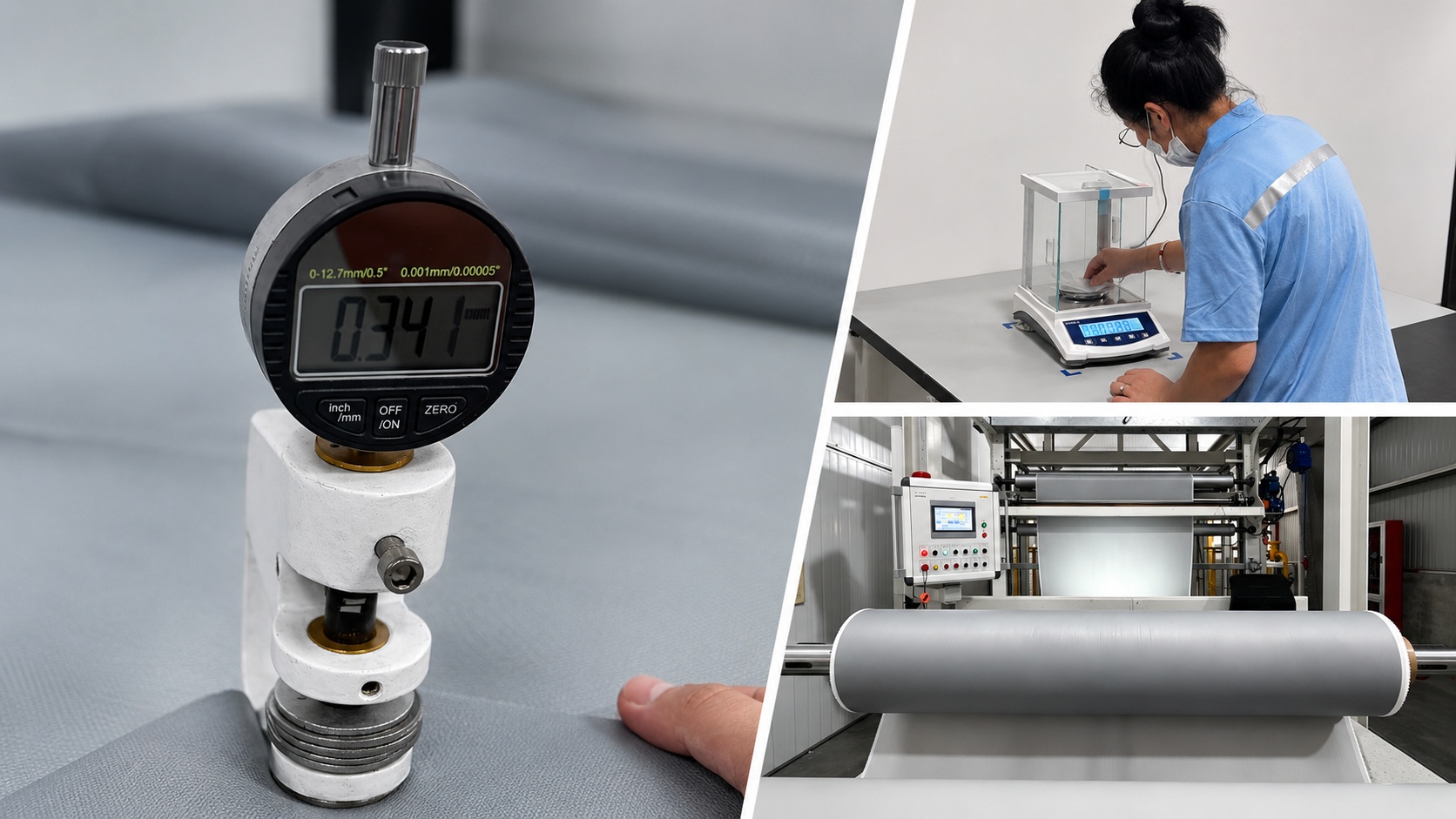
Basic Quality Checks Before Bulk Ordering
Before approving a production order, buyers should verify several basic items:
- Fabric weight
- Thickness
- Coating consistency
- Surface condition
- Width tolerance
- Roll length
- Color consistency
- Required technical documentation
For a new HVAC connector project, a sample or small trial order can help confirm compatibility with the customer’s cutting, sewing or assembly process before bulk production.
FAQ About HVAC Flexible Connector Fabric
Can silicone coated fiberglass fabric be used for HVAC duct connectors?
Yes. It can be used for industrial HVAC flexible connectors when the fabric construction meets the required temperature, mechanical, environmental and safety conditions.
Is single-sided silicone coating sufficient?
It depends on the connector design. Single-sided coating may be suitable for some structures, while double-sided coating may be preferred when both surfaces require protection.
What thickness should be selected?
There is no universal thickness. The correct specification depends on connector size, vibration, mechanical load, temperature and fabrication requirements.
Can fabric width be customized?
Yes. Industrial silicone coated fiberglass fabric can be produced in different widths and roll specifications depending on manufacturing capability and order requirements.
Conclusión
Choosing silicone coated fiberglass fabric for HVAC flexible connectors requires more than comparing temperature ratings or thickness.
Industrial buyers should evaluate the full operating environment, including:
- Temperature
- Vibration
- Airflow
- Mechanical movement
- Fabric strength
- Coating construction
- Moisture and environmental exposure
- Safety requirements
- Width and fabrication method
The most suitable material is the one that balances thermal resistance, flexibility, mechanical durability, processing requirements and cost for the actual HVAC system.
For custom HVAC connector projects, providing detailed operating conditions and specifications helps the supplier recommend a more suitable fiberglass fabric construction and reduces the risk of over-specification or premature material failure.

 Spanish
  English
  Russian
  Italian
  Arabic
  Portuguese
  German