

Fire resistant coated fiberglass material is widely used in industrial environments where heat protection, flame resistance, spark shielding and thermal insulation are required. These materials are made by combining woven fiberglass fabric with different surface treatments, such as silicone coating, PU coating, vermiculite coating, or high silica fabric made with silica-rich yarns.
Different coated fiberglass materials provide different performance advantages. Some are better for flexibility and moisture resistance, while others are more suitable for high-temperature exposure, welding sparks or heavy-duty fire protection.
For industrial buyers, choosing the right material is not only about fire resistance. It is also important to consider flexibility, surface durability, sewing performance, spark resistance, weather exposure and the final application environment.
Why Fire Resistant Coated Fiberglass Materials Are Used in Industry
Fiberglass fabric provides good strength, dimensional stability and heat resistance. However, many industrial applications require more than basic fiberglass cloth. The fabric may need better surface protection, improved handling, reduced fiber irritation, stronger spark resistance or better weather performance.
This is why coated fiberglass materials are widely used in industrial safety products.
Common applications include:
- Welding blankets
- Welding curtains
- Fire curtains
- Removable insulation covers
- Thermal insulation jackets
- Expansion joints
- Pipe and valve covers
- Protective equipment covers
- Fire-resistant barriers
- OEM heat protection products
Each application may require a different coated fiberglass material. For example, a flexible insulation jacket may need a smooth silicone coated surface, while heavy welding protection may require a fabric with stronger resistance to sparks, slag or hot particles.
Main Types of Fire Resistant Coated Fiberglass Materials
The most common fire resistant coated fiberglass materials include silicone coated fiberglass fabric, PU coated fiberglass cloth, high silica fabric and vermiculite coated fiberglass fabric.
Each material has its own advantages depending on the working environment and product design.
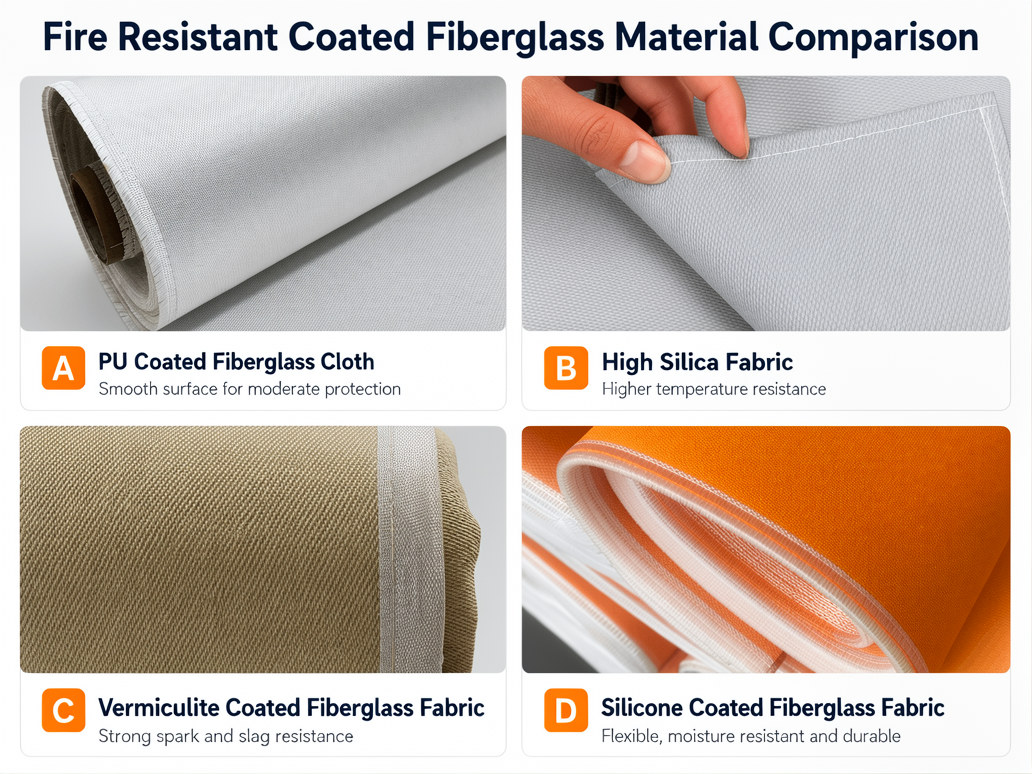
This comparison helps buyers understand how each fire resistant coated fiberglass material performs in different industrial applications.

Silicone Coated Fiberglass Fabric
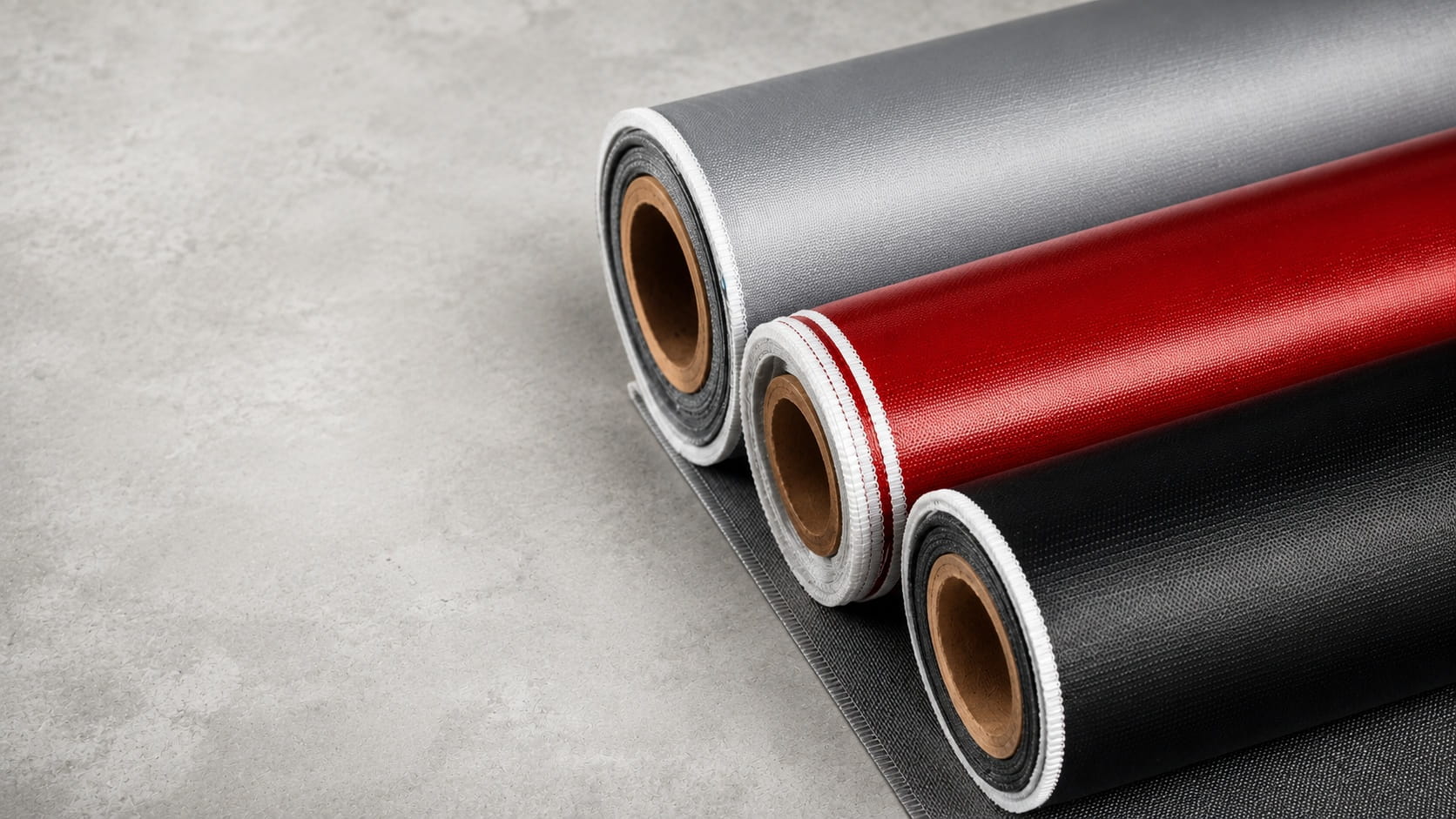
Silicone coated fiberglass fabric is made by applying silicone rubber coating to one or both sides of woven fiberglass cloth. The fiberglass base provides strength and heat resistance, while the silicone coating improves flexibility, moisture resistance, surface durability and handling performance.
Key feature: Flexible, moisture resistant and durable.
Silicone coated fiberglass fabric is commonly used for applications that require flexible protection and long-term industrial performance.
Common applications include:
- Welding blankets
- Fire curtains
- Removable insulation covers
- Thermal insulation jackets
- Expansion joints
- Industrial protective barriers
- Equipment covers
Compared with untreated fiberglass cloth, silicone coated fiberglass fabric has a smoother surface and better resistance to moisture, oil, dust, abrasion and outdoor exposure. It is also easier to cut, sew and fabricate into custom finished products.
For buyers who need flexible covers, curtains, jackets or reusable protection systems, silicone coated fiberglass fabric is often a practical material choice.
PU Coated Fiberglass Cloth
PU coated fiberglass cloth is fiberglass fabric coated with polyurethane. PU coating can provide a smooth surface finish, improved handling and moderate protection depending on the coating formulation.
Key feature: Smooth surface for moderate protection.
PU coated fiberglass cloth may be selected for applications where a coated surface, flexibility and general protection are required, but extreme temperature resistance is not the main requirement.
Common applications include:
- Light-duty insulation covers
- Protective industrial fabrics
- General fire-resistant barriers
- Flexible covers
- Curtain materials
PU coated fiberglass cloth may be suitable for some light-duty protective covers, curtains or general fire-resistant applications, but buyers should confirm the actual working temperature and fire safety requirements before using it in high-temperature or severe welding environments.
High Silica Fabric
High silica fabric is made from silica-rich yarns and is designed for applications that require stronger high-temperature performance. Compared with standard fiberglass fabric, high silica fabric is often selected for more demanding heat exposure and fire protection environments.
Key feature: Higher temperature resistance.
High silica fabric is commonly used in:
- High-temperature insulation systems
- Fire protection barriers
- Welding protection
- Thermal shields
- Fire blankets
- Industrial heat protection systems
The main advantage of high silica fabric is its higher heat resistance. However, depending on the fabric structure and surface treatment, it may be less flexible or less smooth than silicone coated fiberglass fabric.
For applications that require stronger high-temperature protection, high silica fabric can be a suitable option. For applications that require frequent folding, sewing, cleaning or outdoor exposure, silicone coated fiberglass fabric may be easier to process and handle.
Vermiculite Coated Fiberglass Fabric
Vermiculite coated fiberglass fabric is fiberglass fabric treated with a vermiculite coating. This coating helps improve resistance to sparks, heat, welding spatter and hot particles.
Key feature: Strong spark and slag resistance.
Vermiculite coated fiberglass fabric is commonly used in:
- Welding protection blankets
- Hot work curtains
- Metal cutting protection systems
- Furnace protection
- Heat shields
- High-temperature safety barriers
Vermiculite coated fabric is often selected for harsh welding and metal processing environments. It can provide stronger resistance against sparks and slag compared with some lighter coated fabrics.
However, vermiculite coated fabric may feel rougher and less flexible than silicone coated fiberglass fabric. It may also be less suitable when a smooth, cleanable or weather-resistant surface is required.
For heavy welding protection, vermiculite coated fiberglass fabric can be a strong option. For reusable covers, insulation jackets and flexible equipment protection, silicone coated fiberglass fabric may offer better handling and surface durability.
Key Differences Between These Fire Resistant Materials
Different coated fiberglass materials are designed for different industrial conditions. Buyers should compare them based on temperature resistance, flexibility, surface protection, spark resistance and fabrication requirements.
| Material Type | Main Advantage | Suitable Applications |
|---|---|---|
| Silicone coated fiberglass fabric | Flexible, moisture resistant and durable | Insulation jackets, fire curtains, covers and flexible barriers |
| PU coated fiberglass cloth | Smooth surface for moderate protection | Light-duty covers, curtains and general protective fabrics |
| High silica fabric | Better suited to higher-temperature applications | Fire barriers, thermal shields and high-temperature insulation |
| Vermiculite coated fiberglass fabric | Strong spark and slag resistance | Welding blankets, hot work curtains and metal cutting protection |
Temperature Resistance
Temperature resistance depends on the base fabric, coating type, coating weight and application environment.
High silica fabric and vermiculite coated fiberglass fabric are often selected for more demanding high-temperature and welding environments. Silicone coated fiberglass fabric offers a strong balance of heat resistance and flexibility. PU coated fiberglass cloth is usually more suitable for moderate heat protection unless a special formulation is used.
For more details about heat performance, you can also read our guide on temperature resistance of silicone coated fiberglass fabric.
Flexibility
Silicone coated fiberglass fabric usually provides good flexibility and is suitable for cutting, sewing, wrapping and custom fabrication.
PU coated fiberglass cloth can also offer flexibility for some light-duty applications. High silica fabric and vermiculite coated fabric may be less flexible depending on thickness, coating treatment and fabric construction.
For removable covers and insulation jackets, flexibility is very important because the fabric must fit around valves, pipes, flanges and irregular equipment shapes.
Surface Protection
Silicone coating provides a smooth and protective surface. It helps improve resistance to moisture, weather, oil, dust and abrasion. This makes silicone coated fiberglass fabric suitable for outdoor or industrial environments where surface durability matters.
PU coating can also improve the surface appearance and handling of fiberglass cloth, but it may not provide the same high-temperature performance as other materials.
Vermiculite coating focuses more on spark and slag resistance, while high silica fabric focuses more on fire and temperature performance.
Spark and Slag Resistance
For welding protection, spark and slag resistance are important.
Vermiculite coated fiberglass fabric and high silica fabric are often selected for more severe welding environments. Silicone coated fiberglass fabric can also be used for welding curtains, welding blankets and protective barriers, especially where flexibility and reusability are important.
For heavy molten metal exposure, buyers should select the fabric specification carefully according to the actual working condition.
Moisture and Weather Resistance
Silicone coated fiberglass fabric performs well where moisture resistance and outdoor exposure are important. The silicone coating helps protect the fiberglass surface and makes the fabric more suitable for covers, curtains and flexible barriers used in changing environments.
PU coated fiberglass cloth may also provide surface protection, but its suitability depends on the coating formulation and temperature exposure.
High silica and vermiculite coated fabrics are more commonly selected for heat and fire performance rather than weather resistance.
Fabrication and Sewing Performance
For OEM products, fabrication performance is very important. Materials used for covers, blankets, jackets and curtains must be easy to cut, sew, fold and assemble.
Silicone coated fiberglass fabric is often preferred for fabricated products because it offers a balance of flexibility, surface strength and processing convenience.
Vermiculite coated fabric and high silica fabric may require more careful processing depending on thickness, coating and final product design.
Which Material Is Better for Welding Protection?
For welding protection, the right material depends on the welding environment.
For general welding curtains, spark barriers and reusable protective covers, silicone coated fiberglass fabric can be a practical choice because it is flexible, durable and easier to fabricate.
For heavier welding spatter, stronger heat exposure or more aggressive hot work conditions, high silica fabric or vermiculite coated fiberglass fabric may be more suitable.
PU coated fiberglass cloth may be used in some light-duty protection applications, but buyers should confirm whether the material is suitable for the actual welding temperature and spark exposure.
In industrial welding safety, there is no single material that works best for every project. The fabric should be selected according to spark level, working temperature, installation method and expected service life.
Which Material Is Better for Fire Curtains?
Fire curtains require stable fire resistance, dimensional stability and reliable barrier performance.
Silicone coated fiberglass fabric is often used for flexible fire curtains where the material must be strong, coated, flexible and easy to process.
High silica fabric may be selected when stronger high-temperature fire barrier performance is required. Vermiculite coated fiberglass fabric may be used for harsher environments involving sparks or hot particles.
PU coated fiberglass cloth may be considered for some curtain applications, but it should be evaluated according to fire rating, heat exposure and project requirements.
For buyers, the key is to match the fabric with the fire curtain design, installation environment and compliance requirements.
Which Material Is Better for Insulation Jackets?
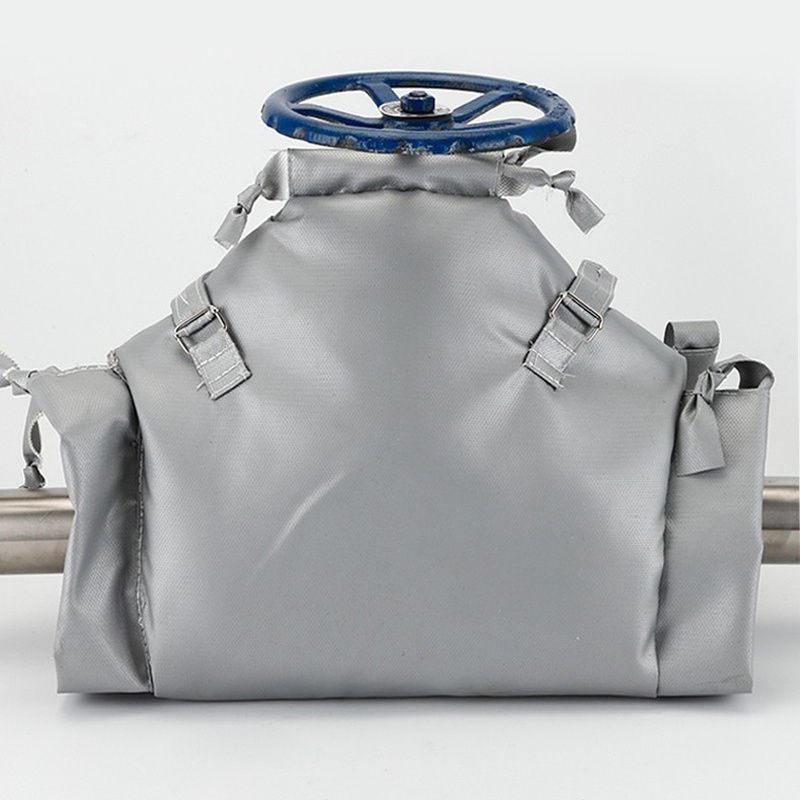
For removable insulation jackets, silicone coated fiberglass fabric is often preferred as the outer layer. This is because insulation jackets require flexibility, sewing performance, moisture resistance, abrasion resistance and repeated handling performance.
The outer fabric must protect the inner insulation layer from dust, moisture, oil, handling damage and environmental exposure. Silicone coated fiberglass fabric performs well in these areas.
High silica fabric may be used when higher heat resistance is needed, but it may not always be the easiest choice for complex jacket shapes. Vermiculite coated fabric may be suitable for more severe heat or spark environments, but it may feel rougher and less flexible.
For standard pipe, valve, flange and equipment insulation covers, silicone coated fiberglass fabric is often a balanced material choice.
How to Choose the Right Coated Fiberglass Material
When selecting fire resistant coated fiberglass material, buyers should consider the complete working condition rather than only one performance factor.
Important selection points include:
- Working temperature
- Short-term or continuous heat exposure
- Spark and spatter level
- Indoor or outdoor environment
- Required flexibility
- Fabric thickness and weight
- Coating type and coating side
- Sewing and fabrication method
- Moisture and chemical exposure
- Finished product design
- Order quantity and customization needs
For example, a welding blanket used in heavy hot work may require stronger heat and spatter resistance. A removable insulation jacket may require better flexibility, surface protection and sewing performance. A fire curtain may require a stable barrier material with suitable fire resistance and dimensional stability.
Material selection should be based on the final application, not only on the material name.
The right fire resistant coated fiberglass material should match the working temperature, spark exposure and fabrication requirements of the final product.
Why Silicone Coated Fiberglass Fabric Is Often Preferred for Flexible Industrial Protection
Silicone coated fiberglass fabric is often selected because it provides a useful balance of performance. It is heat resistant, flexible, moisture resistant, durable on the surface and suitable for custom fabrication.
It may not replace high silica or vermiculite coated fabric in every severe high-temperature condition, but it is highly practical for many flexible industrial protection products.
Common reasons buyers choose silicone coated fiberglass fabric include:
- Good flexibility for covers and curtains
- Smooth coated surface
- Suitable for cutting and sewing
- Better handling than untreated fiberglass cloth
- Good moisture and weather resistance
- Customizable thickness, color and coating side
- Suitable for OEM fabrication
For industrial buyers, this balance makes silicone coated fiberglass fabric a versatile material for fire protection, thermal insulation, welding safety and equipment protection.
You can also explore more fire protection applications for silicone coated fiberglass fabric in different industrial environments.
Why Work with a Factory Supplier
A factory supplier can help buyers select the right fabric according to the final product and working environment. This is especially important when comparing silicone coated fiberglass fabric with PU coated cloth, high silica fabric and vermiculite coated fiberglass fabric.
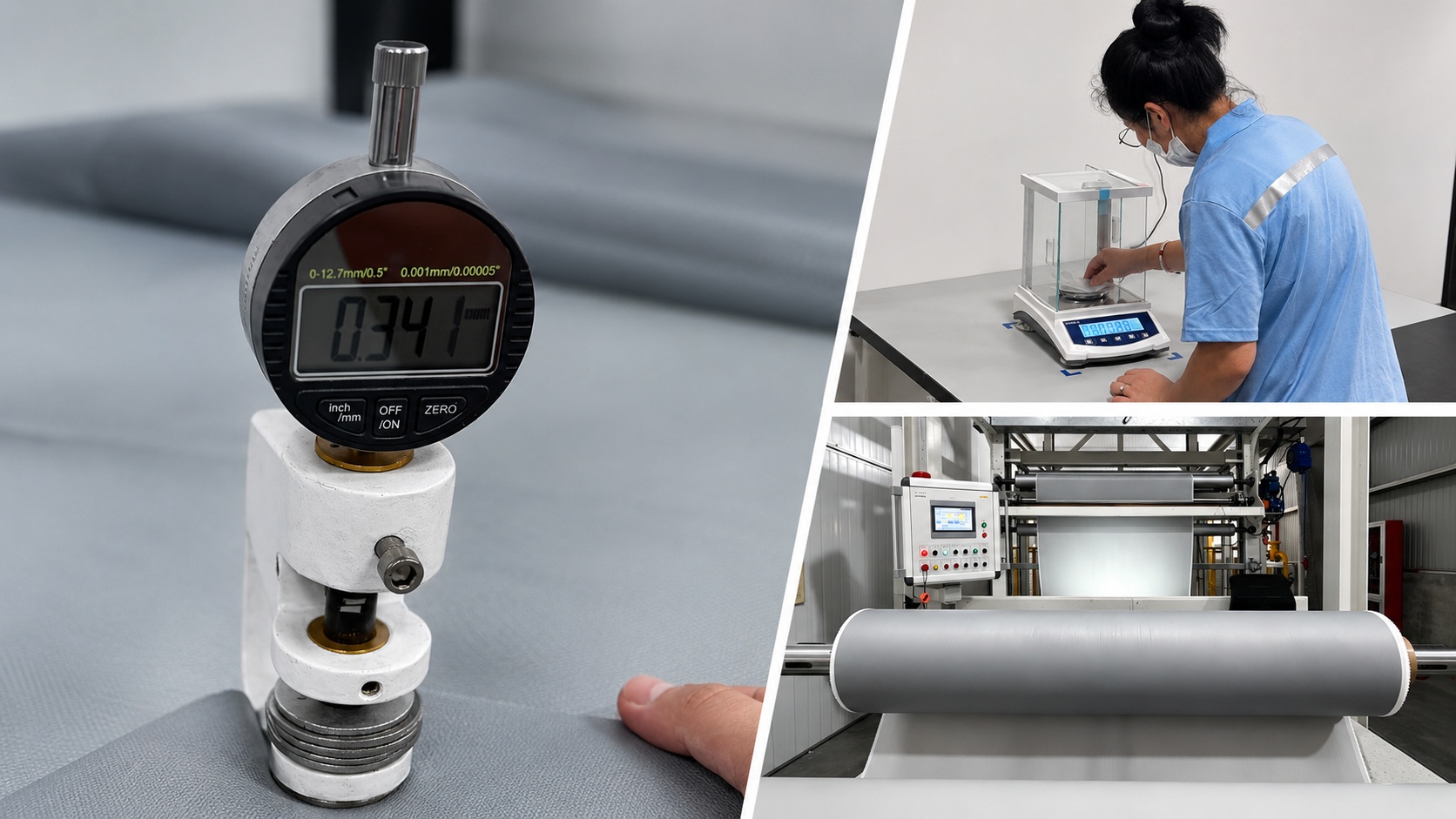
Different applications require different specifications. Fabric weight, coating thickness, coating side, color, width, roll length and surface finish can all affect final performance.
Suihua Fiberglass supplies silicone coated fiberglass fabric for fire protection, welding safety, insulation covers, fire curtains and industrial heat protection applications. Custom options are available for different thicknesses, coating types, colors, widths, roll lengths and finished product requirements.
For bulk buyers, distributors and OEM manufacturers, choosing the right coated fiberglass material can improve product durability, reduce material mismatch and support long-term supply stability.
Conclusion
Fire resistant coated fiberglass material can be made with different coating systems and fabric structures. Silicone coated fiberglass fabric, PU coated fiberglass cloth, high silica fabric and vermiculite coated fiberglass fabric each have their own strengths.
Silicone coated fiberglass fabric is often preferred for flexible industrial protection, insulation jackets, fire curtains, covers and fabricated products. PU coated fiberglass cloth may be suitable for moderate protection and smooth surface applications. High silica fabric is better suited to higher-temperature fire protection applications. Vermiculite coated fiberglass fabric is useful for more demanding spark and welding environments.
The best material depends on temperature, flexibility, spark exposure, surface protection and final product design.
Contact Suihua to discuss fire resistant coated fiberglass material specifications, silicone coating options, custom roll sizes and bulk supply requirements.

 Russian
  English
  Spanish
  Italian
  Arabic
  Portuguese
  German